Friday, February 24, 2012

A clever cheese plate at Dabbous


I've said this before but it always surprises me how little effort restaurants make to serve their cheese with style so it was good to find this clever cheese plate at one of London's hottest new openings, Dabbous.

What caught my eye was the fact that it came with baked apple. In fact it was more like the sort of sticky, caramelised apple you find on the top of a tarte tatin - though not as sweet.

The cheeses were from front to back were Driftwood a French-style goats' cheese from Whitelake in Somerset, Wigmore, a bloomy-rinded ewes milk cheese from Berkshire, a scoop of creamy Lancashire Bomb a 24 month old Lancashire cheese from Goosnargh and Crozier Blue, a ewes milk cheese from Co. Tipperary, sister (brother?) cheese to the more famous Cashel Blue. The Lancashire and the Crozier Blue went particularly well with the apple.

Full marks for presentation and for serving a selection of British and Irish rather than French or Italian cheeses. The plate also came with toasted sourdough - toasted on one side which didn't make it too crisp.

Sunday, February 5, 2012

Gorgeous gougères


There's nothing nicer with drinks than something warm, crisp and cheesy and gougères fit the bill perfectly. I made a batch last night for a couple of friends and wondered why I didn't make them more often. (Probably just as well, on reflection. We scoffed the lot.)

Basically they're a cheese-flavoured choux puff and choux pastry is the easiest type of pastry to make. You simply melt the butter in water, tip in the flour, beat in the eggs and spoon it out. Well, pretty much. Here's the actual recipe from my book Food, Wine and Friends which is out of print though you should be able to find a second hand copy.

Makes 20-24
50g (2 oz) butter
75g (3 oz) strong white flour, sifted with 1/4 tsp salt and a pinch of cayenne pepper
2 large (but not extra-large) eggs and some extra beaten egg
50g (2 oz) mature Gruyère or Comté, finely grated (but not as fine as parmesan. I used Beaufort which I happened to have in the fridge which worked just as well)

You'll also need 2 lightly oiled baking trays

Preheat the oven to 220°C/425°F/Gas 7. Measure 150 ml (5 fl oz) of water into a saucepan and add the butter cut into cubes. Heat gently until the butter has dissolved then bring to the boil.

Take the pan off the heat and tip in the sifted flour all at once. Beat vigorously with a wooden spoon until the mixture forms a ball and leaves the sides of the pan clean. Set aside for 5 minutes.

Beat the large eggs and add them to the pastry bit by bit, working them in till the mixture is smooth and glossy (This is much easier and quicker in a food processor) Add all except 1 heaped tbsp of the cheese.

Beat the remaining egg and brush the top of each puff lightly with a pastry brush, sprinkling them with the remaining cheese.


Run the two baking sheets under the tap to make them slightly damp. Shake off any excess water. Using two teaspoons place spoonfuls of the mixture onto each sheet then bake in the oven for about 25 minutes until puffed up and golden. (Some people pipe the paste which gives you more perfect results but I can't be bothered.)

Remove the gougères from the oven and cut a small slit in the base of each to let the hot air escape and keep them crisp. Pop them back in the oven again, base side upwards for a minute then remove and cool on a wire rack.

Eat warm so if you make them ahead - and you can - just heat them through for about 4 minutes in a moderate oven. (Very good with Chablis and other white burgundy or a glass of champagne.)

Tuesday, January 17, 2012

Real Swiss cheese

If you asked the proverbial man in the street which countries make the best cheese I’m sure Switzerland would be in their top three which makes it ironic that, Gruyère apart, we get hardly any Swiss cheese of note in the UK.

So it’s good to find a food writer colleague of mine Sue Style has written a really excellent book on the lesser known artisanal Swiss cheeses, called Cheese: Slices of Swiss Culture. It’s charmingly illustrated with old prints and paintings and covered with a edelweiss-patterned material which is apparently used for the shirts that are worn by cheesemakers, country music players and, er ... wrestlers.

We tasted three of the cheeses she writes about at a food writers’ get together before Christmas and they were totally delicious, particularly the gooey Vacherin-like Bergfichte from Willi Schmid of Lichtensteig. The others were an 18 month old Gruyère Surchoix and a Mont Vully Classique, a semi-hard Appenzeller-like cheese from the Fribourg canton

The book is thorough but never dry, explaining exactly how each cheese is made, how it tastes and the story of the producer she has chosen to represent it. What’s fascinating is how the French, German and Italian influences in the country all make their way into the cheeses. There are also details of tourist trails such as the Chemin du Gruyère and the Sbrinz route which runs through the mountains south of Lucerne.

Sue is also an accomplished cookery writer and there’s a short but appealing selection of recipes at the end of the book including a wicked-looking cheese pudding called Ramequin, a cauliflower and broccoli cheese with walnut crumble, cheese pasties with bacon and potatoes and - best of all, I suspect - a double decker ‘rosti’ sandwich filled with melted cheese which looks well worth abandoning the new year diet (what diet?) for.

You can buy Swiss cheese, as I’ve mentioned before, from KaseSwiss who are now back in Borough Market opposite the Monmouth Coffee Company on Thursdays, Fridays and Saturdays and still at Druid Street on Saturdays. And you can buy Sue's book direct from the publisher Bergli here. At 49 Swiss francs (£33.63) it's not cheap but if you're a cheesemonger or a serious cheese aficionado it's well worth it.

Wednesday, December 21, 2011

My Christmas cheeseboard


Last week we had what is becoming our annual Christmas Cheese School - an evening of cheese, wine and beer tasting which to be honest is more of a jolly than a class. But I put together this festive cheeseboard just to show you don't have to go down the conventional route of featuring 5 or 6 cheeses.

It was inspired by sprays of decorative crab apples I found in our local greengrocer (most of my time was spent trying to persuade people not to eat them - not that they were poisonous, just bitterly sour). I added a brightly coloured persimmon and a pomegranate which I halved to show the seeds, some of the Fine Cheese Company's Toast for Cheese I told you about recently and a large hunk of Stichelton, the unpasteurised version of Stilton. It was unbelievably simple and looked really pretty in the glowing candlelight.

Have a happy Christmas, one and all.

Wednesday, December 14, 2011

The Australian cheese scene part 1: Yarra Valley Dairy


The Aussies are so good at everything food and wine-related I expected them to be brilliant at cheese too. It's coming but they still have a way to go, judging from my recent visit. Admittedly I didn't visit some of the best areas for cheese such as Gippsland and Tasmania but I'd say they were 4-5 years behind the states*.

They're hampered of course by the fact that they can't make unpasteurised cheeses, an extraordinary situation. Government intervention gone mad. They're campaigning against it as you can see from this poster in the cheese room at De Bortoli but until they get the right to work with raw milk they'll never make great cheese.


That was certainly the problem with the camembert-style cheeses I tasted at the Yarra Valley Dairy, one of the highlights of the trip in cheese terms but in every other respect it was a model modern dairy turning out interesting and innovative cheeses.


I particularly liked their marinated cheeses, Saffy and Cardi (Australians abbreviate everything!) made with saffron and cardamom respectively. They're softer than most marinated cheeses I've come across - more like a spice-infused spreadable cheese - and absolutely delicious. Saffy is made from cows milk and flavoured with saffron, cumin and lemon zest. Cardi, which is slightly smokey, is based on goats' milk. There's also a cheese called Juno (short for juniper, of course) which I didn't get to taste.


Jack Holman the cheesemaker also make a delicious Persian Fetta (sic) which is flavoured with olive oil, thyme and garlic and packed in rather dinky tins which are apparently served in Emirates first class. (I didn't get to experience that, sadly!) It would also be great crumbled into a salad or on pizza or flatbreads.

I also liked their Black Savourine - a Valençay-style ash-coated goats cheese though again this would have been better made from unpasteurised milk.

If you're in the area do visit them. They have s fantastic shop which also sells a lot of wines from small producers who don't have a cellar door. We tried the Bird on a Wire Marsanne (perfect with the Saffy) and a very good chardonnay called Salo which you can also buy from the excellent Barrique wine store in Healesville.

*For a more complete rundown on artisan cheeses in Australia read this recent feature in The Age.

Friday, November 25, 2011

Toast is the new biscuit for cheese


I'm always struggling to find the perfect biscuit for cheese. I really don't like digestive biscuits and even find oatcakes a touch too sweet (except with blue cheese). I'm not a big fan of crackers and water biscuits though I do like crisp Italian-style flatbreads. Now along comes Toast for Cheese, the brainwave of the inventive Ann-Marie Dyas of the Fine Cheese Company in Bath (below).


I must confess I'm a huge fan of Ann-Marie's. She was the first to create biscuits and pastes to complement different cheeses, the first to devise attractively packaged cheese selections to sell online, the first cheesemonger - so far as I know - to sponsor a cheese festival and now she's discovered toast.

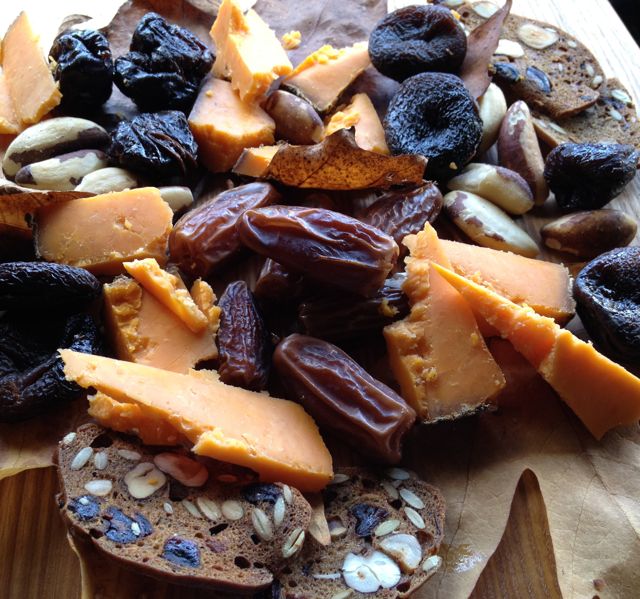
And not just any toast. Three different kinds studded with dates, hazelnuts & pumpkin seeds (for creamy cheeses such as Brillat-Savarin, Brie de Meaux and Vacherin Mont D’Or), apricots, pistachios & sunflower seeds for goats’ cheeses such as Valençay, Crottin de Chavignol and Ragstone and cherries, almonds and linseeds for blue cheeses such as Fourme D’Ambert, Stilton and Gorgonzola Dolce. Of course you can try other cheeses with them. I wasn't at all sure the apricot and pistachio biscuits wouldn't have been better with a slightly stronger washed rind cheese but the main point is that they look absolutely stunning and would make a great present for anyone you were visiting over Christmas. You can buy all three boxes for £7.50.

Here's what I did with the date, hazelnut and pumpkin seed ones at Cheese School the other week.

Thursday, November 17, 2011

A Camembert roaster - the gadget you didn't know you needed


I love it when a small producer writes and tells me about something they've created especially when it's as off-the-wall as this handmade Camembert roaster which is made by Sussex blacksmith, Alex Moore.

It's designed to roast boxed cheeses like Camembert on the embers of an open fire, or log burning stove. You simply unwrap your cheese, place it back in the bottom of the box and put it in the roaster's pan. Needless to say I immediately wondered what would happen if the box caught fire but, as you can see, the base is really thick so as long as you don't have flames flickering round it you should be fine, Alex told me.

If you don't have an open fire, you can apparently use the roaster on the top plate of an Aga or put into a conventional oven with the door ajar. You can also use it for chestnuts.


Let's face it, no-one actually needs an object like this but it's amazingly beautiful and a lovely thing to use for roasting cheese with the family around Christmas or any cold winter's night. The perfect present for a cheeselover.

The price is £58, including delivery to a UK mainland address and you can order it from www.mooredesigns.co.uk

PS have also spotted that they make some pretty funky garden benches and this lovely tree seat.